Closing the Digital Skills Gap in Niger Delta
Education, Digital Inclusion, Niger Delta
Closing the Digital Skills Gap: Why the Niger Delta Needs More Tech Education
We explore why closing the digital skills gap in the Niger Delta is not just a tech issue, but a generational opportunity to unlock jobs, innovation, and inclusive growth.
A Region Rich in Talent, Short on Access
When people talk about the Niger Delta, they often focus on oil, conflict, or environmental damage. Yet anyone who has spent time in Port Harcourt, Warri, Yenagoa, or the riverine communities knows another truth: the region is overflowing with curiosity, creativity, and resilience. Young people repair phones, run small online businesses on spotty connections, and teach themselves design, coding, and video editing from free YouTube tutorials whenever data allows. The problem is not talent; it is access.
The digital skills gap Niger Delta faces is a gap in opportunity. Across Nigeria, analysts have warned that a lack of digital capabilities is slowing down the country’s ability to fully tap its digital economy potential. Brookings, for example, notes that bridging the digital skills gap in Nigeria is now central to growth and competitiveness. Yet in many Niger Delta communities, students still share a single outdated desktop, or learn “computer studies” by copying diagrams of keyboards into exercise books. This is where the gap widens: global employers are looking for cloud computing, data analysis, cybersecurity, and AI literacy, while many local schools are struggling to keep basic ICT labs running.
Encouragingly, change is underway. Initiatives like our STEM education explainer are helping parents, teachers, and policymakers understand why science, technology, engineering, and mathematics must move from theory to practice. Niger Delta Innovate’s work with Technovation Clubs, teacher training, and curriculum-aligned content is one practical response to the digital skills Nigeria needs. But the scale of the challenge means we must go further, faster, and more deliberately if we want to turn today’s raw talent into tomorrow’s tech workforce.
What Happens When the Gap Is Left Unaddressed
Leaving the digital skills gap Niger Delta unaddressed has real consequences. At the national level, modeled estimates put Nigeria’s unemployment rate at around 22.6%, according to the IMF. At the same time, over 90% of workers are in the informal sector, based on recent data from Nigeria’s National Bureau of Statistics. That means millions of people are working hard, but with low income security, few benefits, and limited prospects for advancement. Digital skills alone cannot fix this, but they are one of the clearest pathways into more stable, better-paid work in services, ICT, and education—sectors that, according to job vacancy analyses, are already driving most new formal opportunities.
For the Niger Delta, failing to invest in tech education Niger Delta communities means reinforcing existing inequalities. Vacancies are already heavily concentrated in the South West, especially Lagos. Without deliberate investment, youth from riverine and coastal communities will continue to watch opportunities flow elsewhere. They will remain consumers of technology, not creators; users of social media, not builders of platforms; spectators in a digital economy that urgently needs their ideas and lived experience to solve local problems, from flooding and waste management to agriculture and logistics.
There is also a social cost. When bright, motivated young people feel locked out of meaningful work, frustration grows. Communities that have already borne the environmental and economic costs of extraction risk being left behind a second time, this time by the global shift to digital. Closing the skills gap is therefore not just about coding bootcamps; it is about giving young people a stake in a future that feels possible, dignified, and rooted in their own region.
💡 Key Point: Without targeted digital skills investment, the Niger Delta could miss out on the very sectors now generating most new formal jobs in Nigeria.
What Closing the Gap Actually Looks Like
It is easy to agree that the digital skills gap Niger Delta faces must be closed. It is harder, and more important to define what that actually looks like on the ground. Closing the gap is not a single project, but a set of reinforcing actions that touch classrooms, homes, community centers, and workplaces. It means:
Ensuring every child experiences hands-on computing, robotics, and problem-solving, not just theory on a chalkboard.
Training teachers so they feel confident guiding students through coding, digital research, and online safety.
Providing reliable devices, internet access, and power so learning is consistent, not a once-in-a-term event.
Connecting learning to real opportunities—internships, freelance work, entrepreneurship support, and paid roles.
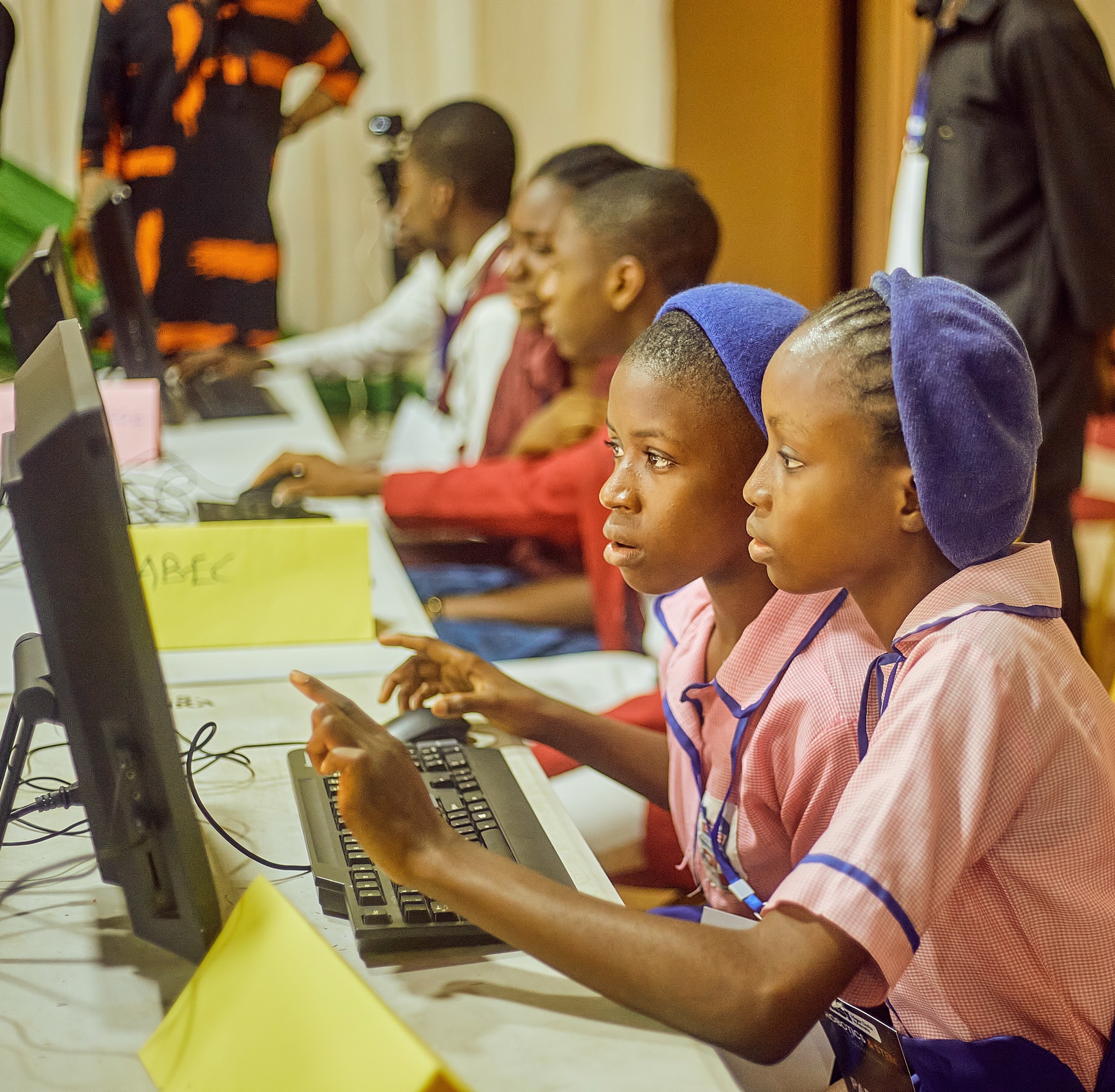
We are already seeing glimpses of this future. At the Robotics and STEM Fair 2026, hosted by Niger Delta Innovate at Okrika Grammar School, over 300 students, teachers, and community leaders gathered to watch young people build robots, answer STEM quiz questions powered by the Loop learning platform, and even demo an AI chatbot built in Scratch by junior secondary students. Those scenes matter because they show what happens when access meets ambition: students begin to see themselves not as passive recipients of aid, but as makers and innovators.

Practical robotics and coding projects turn abstract digital skills into real confidence.
Beyond events, systemic initiatives are emerging. Delta State’s DeltaLearn platform and tools like Attend360 are digitising school operations and supporting teachers with training. Nationally, NSSEC’s plan to train 6,000 teachers in AI and robotics, and the distribution of 45,000 learning tablets by the Niger Delta Development Commission, are expanding the foundation for tech education Niger Delta learners can rely on. University Innovation Pods are turning campuses into innovation hubs, while venture grants are backing student-built solutions. Piece by piece, these efforts begin to form a pipeline from curiosity to competence to career.
The Role of Community, Schools, and Partners
No single organisation can close the digital skills gap Niger Delta communities face. It takes coordinated effort from families, schools, civil society, government, and the private sector. Each plays a distinct role:
Communities and parents can encourage children to explore technology, support attendance at clubs and fairs, and celebrate digital achievements with the same pride often reserved for traditional professions. When parents understand, through resources like our STEM explainer, that coding and robotics can lead to real careers, they become powerful advocates.
Schools are the backbone. From primary to tertiary level, they must weave digital literacy across subjects, using tablets for reading, data tools in science, and creative software in art. Teacher development is crucial; a single empowered teacher can influence hundreds of learners over a career.
Partners and employers - from local startups and telecommunication companies to development foundations and government agencies, can provide infrastructure, curriculum support, mentorship, internships, and funding. Events like the Warri Tech Summit show how convening these actors can shift the narrative from “awareness” to ecosystem-building.
📌 Key Takeaway: When communities, schools, and partners move in the same direction, digital skills stop being a privilege and start becoming a basic right.
For employers, this collaboration is not charity. Nigeria’s labour statistics show a fast-growing service and ICT sector, yet many firms struggle to find candidates with the right mix of digital and soft skills. Investing in digital skills Nigeria needs, especially in under-served regions like the Niger Delta - expands the talent pool, supports regional stability, and ultimately benefits the wider economy. International institutions like the IMF and national bodies like NISER have both pointed out that better skills, better data, and better matching between training and jobs are essential for sustainable employment growth. You can explore more national context in recent labour and digital economy reports from sources such as the IMF’s Nigeria profile.
Building Toward 10,000 Skilled and 2,500 Jobs
At Niger Delta Innovate, we believe ambition must be matched with clear, measurable goals. That is why our vision for closing the skills gap in the region is framed around two concrete targets: 10,000 digitally skilled young people and 2,500 new or improved jobs linked to those skills over the coming years. These are not abstract numbers; they are a roadmap for action.
10,000 skilled means learners who can actually do things: build a basic website, analyse data in spreadsheets, program a simple robot, design a user interface, or manage social media campaigns with strategy and metrics. It includes teachers who can integrate digital tools into lessons, and youth who can navigate online work platforms safely and professionally.
2,500 jobs means internships that lead to employment, freelance contracts that provide steady income, startup roles in emerging tech companies, teaching positions in newly digitised schools, and entrepreneurship opportunities supported by incubators and micro-grants. It includes better-quality work for those already employed, moving from purely manual roles into tech-enabled positions with higher productivity and pay.
Getting there will require sustained effort. We will need more Technovation Clubs in secondary schools, more community labs where young people can access devices after class, more fairs and hackathons like the Robotics and STEM Fair 2026, and more alignment with national programmes such as the 3 Million Technical Talent initiative. We will also need to keep listening to students who are balancing learning with family responsibilities, to teachers who are stretched thin, and to employers who can help us fine-tune curricula to match real-world needs.
Yet the payoff is enormous. Every young person who gains market-ready digital skills in the Niger Delta is one more bridge between local realities and global opportunities. They are future software engineers, data analysts, digital storytellers, climate-tech founders, edtech innovators, and civic technologists. They are also role models for younger siblings and neighbours, proof that a child from a creek-side community can compete, collaborate, and lead in a digital world.
Your Part in Closing the Digital Skills Gap Niger Delta
The story of tech education Niger Delta is still being written, and you have a role in how it unfolds. Whether you are a parent, teacher, student, policymaker, or professional in Nigeria or the diaspora, you can help accelerate closing the skills gap:
Share resources like our STEM explainer with schools and community leaders, so more people understand why digital skills matter.
Volunteer your time as a mentor, trainer, or judge at events like the Robotics and STEM Fair, online or in person.
Partner with Niger Delta Innovate to sponsor clubs, labs, scholarships, or internships that directly create pathways into work.
If we succeed, the Niger Delta will no longer be described only in terms of what has been taken from it, but also in terms of what it builds: products, companies, and solutions shaped by its own people. That is the future Niger Delta Innovate is working toward; one where 10,000 young people and 2,500 jobs are just the beginning. Join us. Explore our programmes, reach out about partnerships, or sign up to support our next cohort. Together, we can close the digital skills gap in the Niger Delta and open a new chapter of opportunity for the region and for Nigeria as a whole.
Whether you're an educator, a partner, or someone who wants to volunteer, there's a role for you in closing this gap. Get involved with Niger Delta Innovate today.
