5 Essential Digital Skills for Nigerian Students
STEM Education Nigeria, Digital Literacy Nigeria, High School Tech Skills
The Graduation Gap: 5 Digital Skills Every Nigerian Student Needs Before SSS3
Why an “A” in Computer Studies is no longer enough for the realities of university life, online learning, and global remote work.
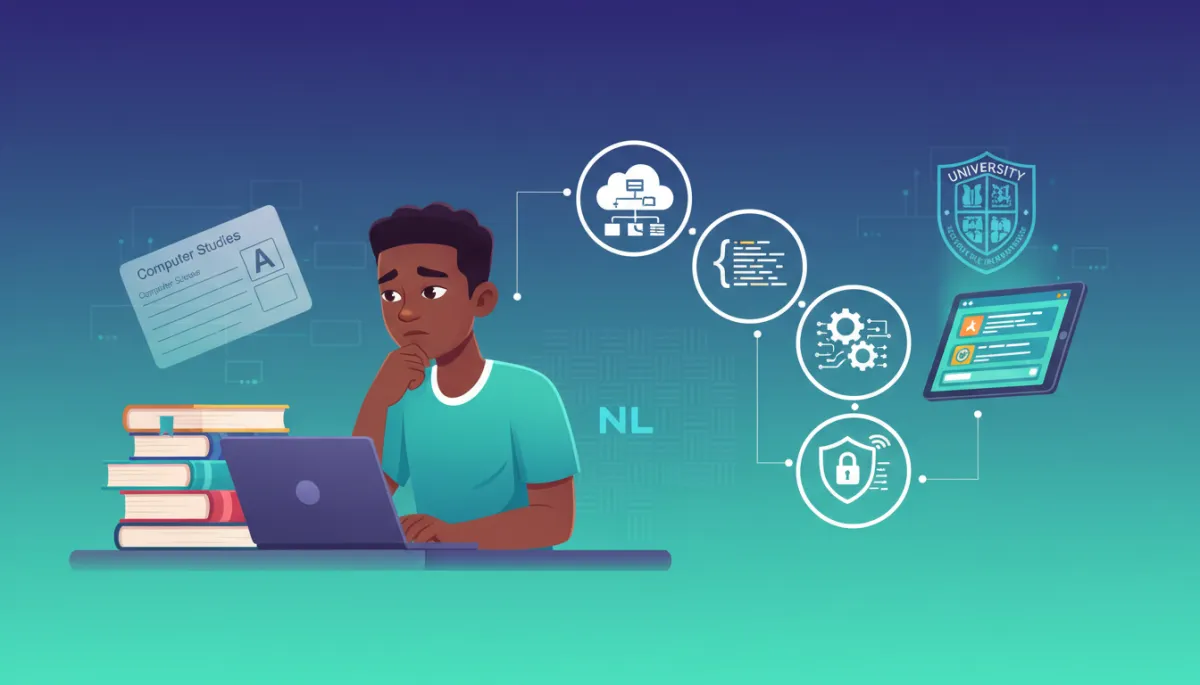
Tunde left SSS3 with what many parents in Nigeria dream about: a clean report card and an A in Computer Studies. His teachers praised him. His principal mentioned him during assembly. On paper, he represented the success of secondary school computer skills in his state.
But two months into 100 level, reality hit. His very first assignment required him to: download a PDF from the university portal, annotate it, rename the file using a specific convention, upload it to Google Drive, share the link with correct permissions, and submit the link on the learning management system before midnight. No one had ever walked him through that workflow in secondary school. He knew what a CPU and monitor were, could define an operating system, and even label parts of a motherboard. Yet, he froze at the “Share link” dialog on Google Drive. That is the graduation gap.
Why Top Exam Grades Don’t Equal Real-World Digital Competence
As a senior software engineer who mentors interns from across Nigeria, I see Tunde’s story repeated every year. Brilliant students with high WAEC and NECO scores in Computer Studies struggle with basic digital workflows the moment tasks move from paper to practice. This is not because they are lazy or unserious; it’s because our assessment system often rewards definitions instead of demonstrations.
Many schools still teach ICT as theory-heavy content: “list five advantages of the internet,” “define RAM,” “state three types of printers.” These questions can produce an “A” while leaving a dangerous computer skills gap in real life. Meanwhile, universities and modern workplaces expect students to:
Navigate online learning platforms and handle complex online learning challenges
Collaborate on documents in the cloud, track versions, and manage permissions
Write small scripts, automate tasks, and think in algorithms, not memorised notes
In 2026, Nigeria’s National Digital Economy Policy and Strategy and programmes like NITDA’s DL4ALL aim to push digital literacy to 70% by 2027. Yet, as of late 2026, less than 2% of that target has been verified. The message is clear: we can’t rely on curriculum documents and theory exams alone. Schools must intentionally build practical digital skills for students in Nigeria before SSS3 ends.
The 5 Core Pillars Every Nigerian Student Needs Before SSS3
1. Computational Logic: Thinking Like a Problem Solver
Computational logic is not about memorising the definition of an algorithm; it is about breaking problems into clear, ordered steps. Whether a student becomes a doctor, lawyer, or engineer, this way of thinking is foundational to STEM education Nigeria needs today.
💡 Pro Tip: Ask students to describe how they get ready for school as numbered steps. Then show them that this is already an algorithm.
For example, here is a simple “algorithm” in Python-like pseudocode that checks who passed an exam:
scores = [45, 67, 80, 39, 90]
pass_mark = 50

for score in scores:
    if score >= pass_mark:
        print("Pass:", score)
    else:
        print("Fail:", score)
Even if students never become programmers, understanding loops, conditions, and step-by-step reasoning will help them handle complex high school tech skills and university assignments without fear.
2. Cloud Productivity: From “Flash Drive” Mindset to “Cloud First”
In most Nigerian universities today, assignments live in the cloud: Google Classroom, Microsoft Teams, Canvas, Moodle, and shared drives. Yet many secondary schools still revolve around copying notes and saving files to a single flash drive. To close the computer skills gap, students must be fluent in:
Creating and organising folders in Google Drive or OneDrive (e.g.
/SSS3/Physics/Assignments)Sharing documents with “view only” vs “can edit” permissions
Collaborating in real time and tracking changes
A simple weekly task could be: “Type your Civic Education summary in Google Docs, rename it using this format: Surname_Firstname_Subject_Week3, and share with your teacher.” That small routine builds real digital literacy Nigeria needs, not just exam recall.
3. Basic Programming: From Users to Creators
Every Nigerian student does not need to become a senior developer, but every student should experience what it feels like to tell a computer what to do—and see it obey. This is the heart of essential tech skills for high school in a digital economy.
Here is a tiny Python example that many of my interns wrote in secondary school, which still impresses me more than a memorised definition of “programming language”:
name = input("What is your name? ")
score = int(input("What is your score? "))

if score >= 70:
    grade = "A"
elif score >= 60:
    grade = "B"
elif score >= 50:
    grade = "C"
else:
    grade = "F"

print(name, "your grade is", grade)
Notice how this uses input, decisions, and output. With tools like Scratch for juniors and Python for seniors, secondary school computer skills can move from passive consumption to active creation, aligning with national efforts and global opportunities.
4. Hardware Maintenance: Respecting the Tools of the Trade
Many school computer labs in Nigeria die early not because the machines are bad, but because students and staff were never taught basic care. Before SSS3, every student should know how to:
Safely shut down and restart systems (not just “hold the power button”)
Plug and unplug peripherals carefully, avoid yanking USB cables
Recognise basic warning signs: overheating, strange sounds, low disk space alerts
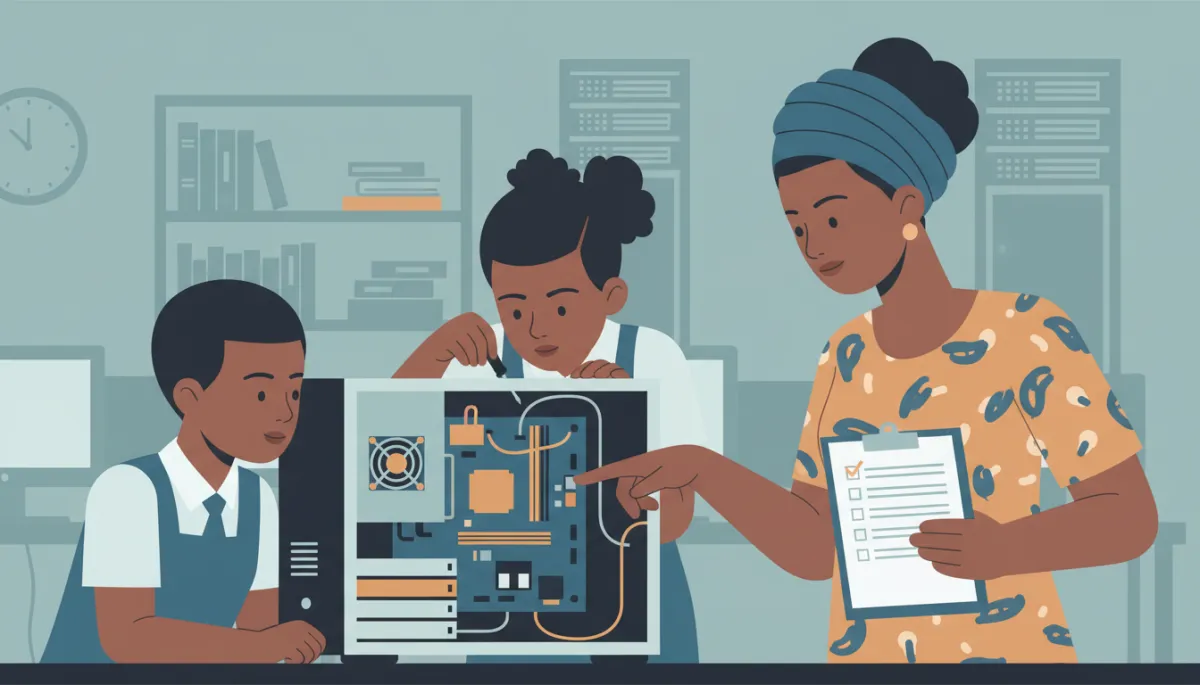
Simple maintenance routines can double the lifespan of school computers and labs.
For many students, these school labs are their first and only exposure to real hardware before university. Treating maintenance as a weekly student-led routine not an emergency, reaction builds responsibility and confidence with technology, a key part of student digital competencies.
5. Cyber Hygiene: Staying Safe in a Connected World
As Nigerian education tech expands zero-rated data for learning platforms, national e-learning portals, and online exams, students are more exposed to phishing links, fake scholarship offers, and account hijacking. Cyber hygiene is the digital equivalent of washing your hands and locking your door.
Using strong, unique passwords and enabling two-factor authentication where possible
Recognizing suspicious links and attachments, especially on WhatsApp and email
Understanding what personal data should never be shared publicly
Preparing Students for Modern University Demands and Remote Global Opportunities
University life in 2026 is a blend of physical lectures and digital platforms. Students download lecture slides, submit assignments online, join group projects across time zones, and sometimes sit proctored online exams. Without solid high school tech skills, many first-year students waste precious time learning basic tools instead of focusing on content.
Beyond university, the world of work is shifting. Nigerian undergraduates now join remote internships for companies in Lagos, Nairobi, London, and San Francisco. They collaborate via Slack, Zoom, GitHub, and cloud drives. Those who built digital skills for students Nigeria needs early in secondary school adapt quickly; others feel permanently behind, even when they are intellectually capable.
“The laptop is the new school bag; the cloud is the new locker. Our students must be comfortable with both before they leave SSS3.”
How NDI & Loop Weave These Skills into Weekly School Routines
The good news is that schools do not need to “add one more subject” to already crowded timetables. Platforms like NDI & Loop focus on integrating these five pillars into existing lessons and routines, turning theory into habit.
Weekly Micro-Projects: Instead of one big ICT exam at term’s end, students complete small, practical tasks; like building a simple calculator in Scratch or organizing a shared class folder every week. This aligns with national initiatives like DL4ALL but keeps it grounded in the classroom.
Teacher-Friendly Workflows: NDI & Loop provide templates and checklists so even non-technical teachers can say, “This week, submit your Biology homework via our shared drive,” and know exactly how to guide students through the process.
Built-In Cyber Hygiene Moments: Before any online activity, the platform prompts a 2-minute safety reminder; checking links, passwords, and privacy, making cyber hygiene a routine, not a one-off seminar.
From a developer’s perspective, what NDI & Loop really do is bridge the gap between policy and practice. Nigeria’s frameworks for digital literacy Nigeria are strong on paper. These tools help schools operationalize them one weekly task, one lab session, one checklist at a time so that students like Tunde are not surprised by their first online assignment.
Don’t Wait for University to Expose the Gap
Tunde eventually caught up. He watched YouTube tutorials, asked classmates for help, and slowly built his confidence with cloud tools and basic programming. But it cost him time, grades, and self-belief he should not have had to lose. No SSS3 student should discover their weaknesses only after stepping onto campus or joining a remote internship.
If you are a school leader, ICT teacher, parent, or policymaker, the question is simple: Are your students exam-ready, or world-ready? The difference lies in these five pillars computational logic, cloud productivity, basic programming, hardware maintenance, and cyber hygiene practiced consistently, not just defined in an exam hall.
📌 Key Takeaway: An “A” in Computer Studies is good. A student who can confidently navigate online platforms, protect their accounts, write simple code, and care for hardware is far better prepared for university and global remote work.
Get the Free 2026 Secondary School Digital Skills Checklist
To help schools and families move from intention to action, we’ve created a practical, classroom-tested resource: the Free 2026 Secondary School Digital Skills Checklist. It breaks down each of the five pillars into concrete, age-appropriate tasks you can track from JSS1 to SSS3, no guesswork, no jargon, just clear, measurable skills.
If you don’t want the next Tunde in your school or home to discover their digital weaknesses the hard way, start now. Integrate these skills into weekly routines, leverage tools like NDI & Loop, and use the checklist as your roadmap.
👉 Download the Free 2026 Secondary School Digital Skills Checklist today and make sure every student in your care graduates not just with good grades, but with the real-world digital competence to thrive in university and the global remote economy.
