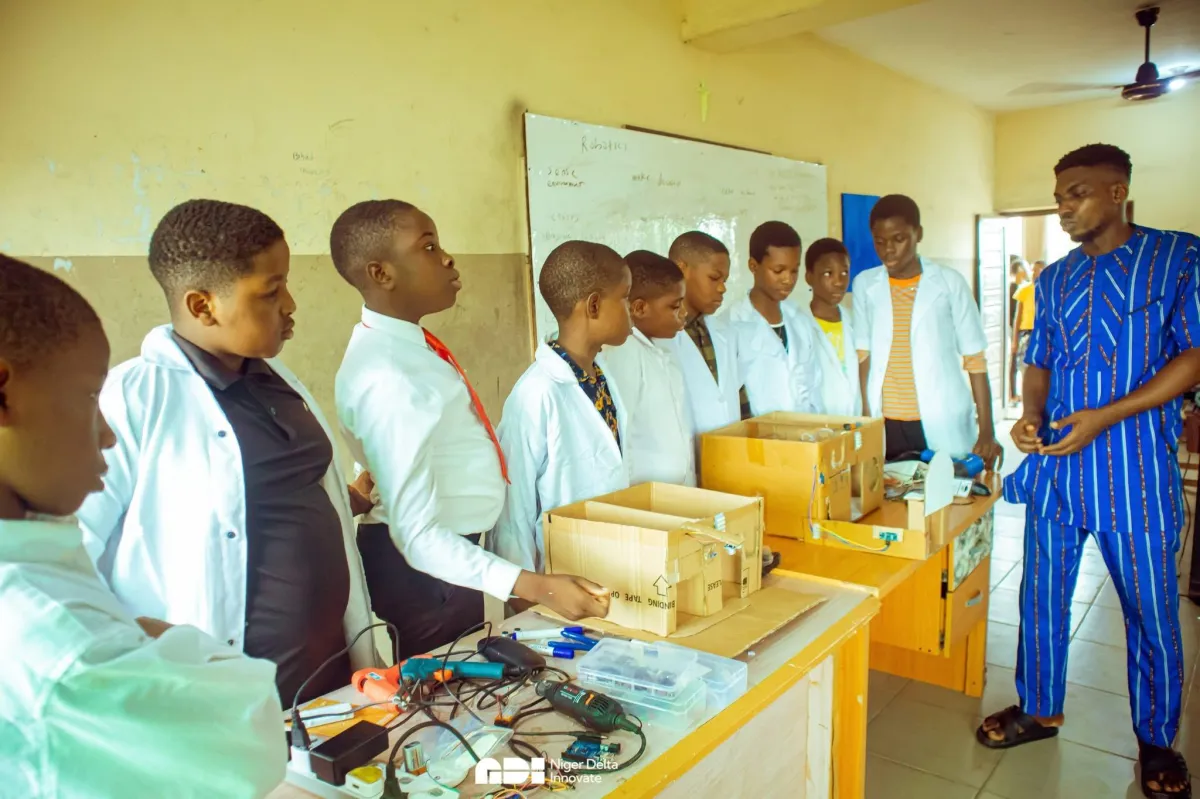
Hands-On STEM: Future Engineers in Rivers State
STEM Education, Robotics Lab Rivers State, Technovation Club Nigeria
Sparks in the Lab: How Hands-On STEM Creates Tomorrow’s Engineers
At Okrika Grammar School in Rivers State, a quiet classroom has transformed into a buzzing robotics lab where wires, laptops, and curious minds come together. Their first robotics assembly did more than power a small motor, it switched on a new way of thinking about science, engineering, and what’s possible for young Nigerians.
The Moment the Motor Spun: A New Kind of Assembly at Okrika Grammar School
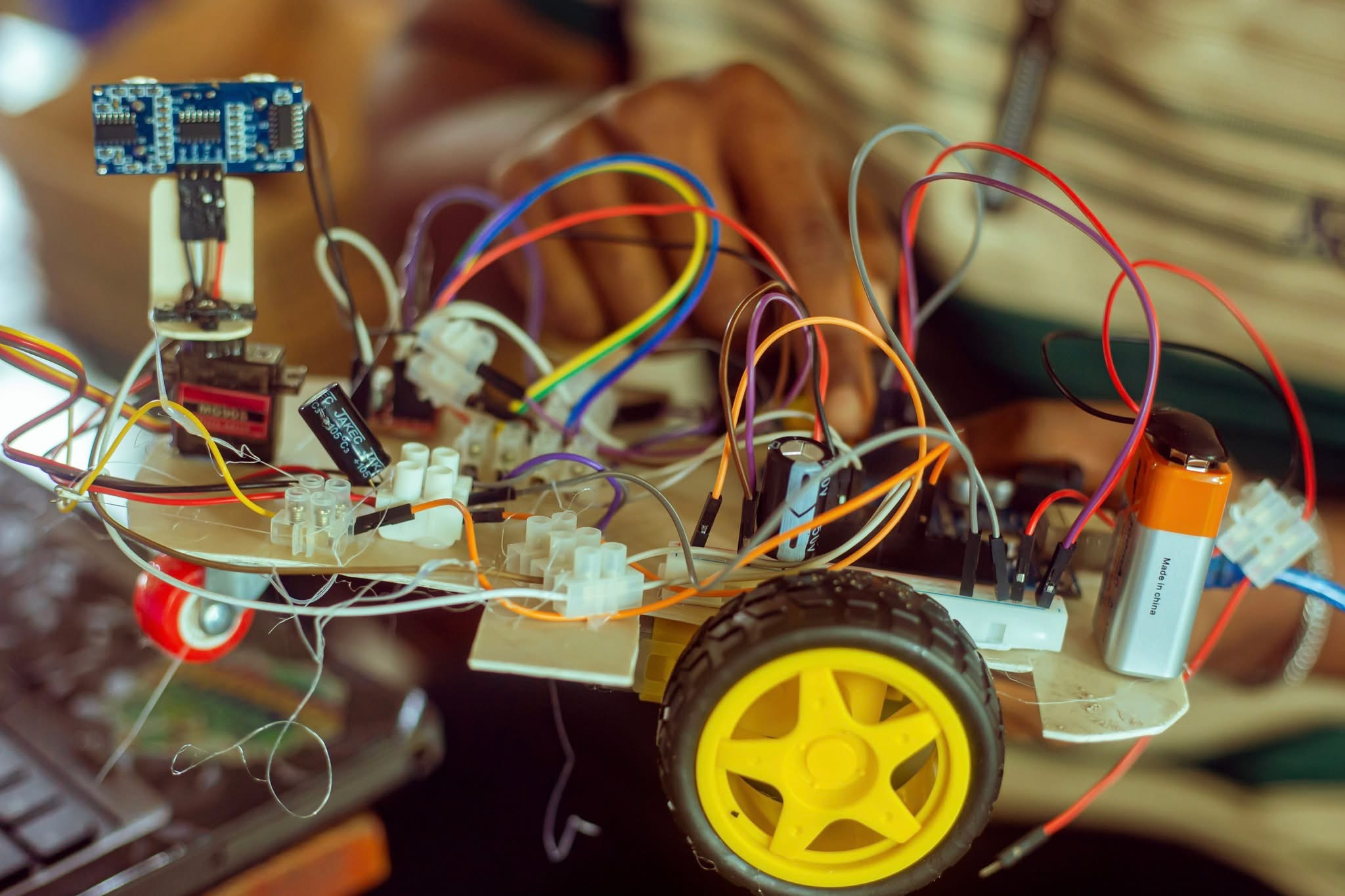
The first robotics assembly at Okrika Grammar School did not begin with a speech, it began with a question: “Can we make this motor move?” Around a central table in the new robotics lab Rivers State students huddled in teams, tracing wires from a battery pack to a breadboard, from a microcontroller to a tiny DC motor. For many, it was the first time they had seen the inside of an electrical circuit instead of just a diagram in a textbook.
One student team became the focus of the room. They debated which wire should go to positive, which to ground, and how to connect the motor through a simple switch. There were false starts, loose connections, reversed polarity, a dead battery swapped out at the last minute. But when they finally pressed the switch and the motor spun to life, the lab erupted. Students clapped, shouted, and leaned in closer, eyes wide. In that instant, physics was no longer an abstract formula; it was motion, sound, and shared excitement.
📌 Key Takeaway: That first spinning motor became a symbol, proof that with the right tools, students can turn theory into tangible engineering outcomes.
Why Theory Alone Leaves Logic Gaps in Young Minds
Across Nigeria, students routinely memorize laws of motion, Ohm’s law, and definitions of current and voltage. Yet many still struggle to answer a simple question: “How does this apply in real life?” Traditional science education, heavily focused on theory, often leaves critical logic gaps that limit deeper understanding and creativity.
No feedback loop: When students only see formulas on the board, they cannot test, fail, adjust, and try again. Logic becomes something to memorize, not something to explore.
Disconnected concepts: Electricity, magnetism, coding, and mechanics are often taught as separate topics. Without a project that combines them, students miss how these ideas interact in real systems like robots or drones.
Limited problem-solving: Exam-style questions have one “right” answer. Real engineering problems rarely do. Students need open-ended challenges to develop true critical thinking.
Hands-on STEM education fills these gaps. When a learner connects a circuit wrong and the motor refuses to spin, they are forced to reason: “Is power reaching the motor? Is the polarity correct? Is the connection secure?” This step-by-step troubleshooting builds the kind of systematic logic that tomorrow’s engineers need, and it cannot be gained from theory alone.
Case Study: Early Impact of the Okrika Grammar School Robotics Lab Rollout
The Okrika Grammar School robotics lab is more than a room with equipment; it is a pilot model for hands on STEM education in Rivers State. Within just a few weeks of launch, clear shifts began to emerge in student attitudes and performance.
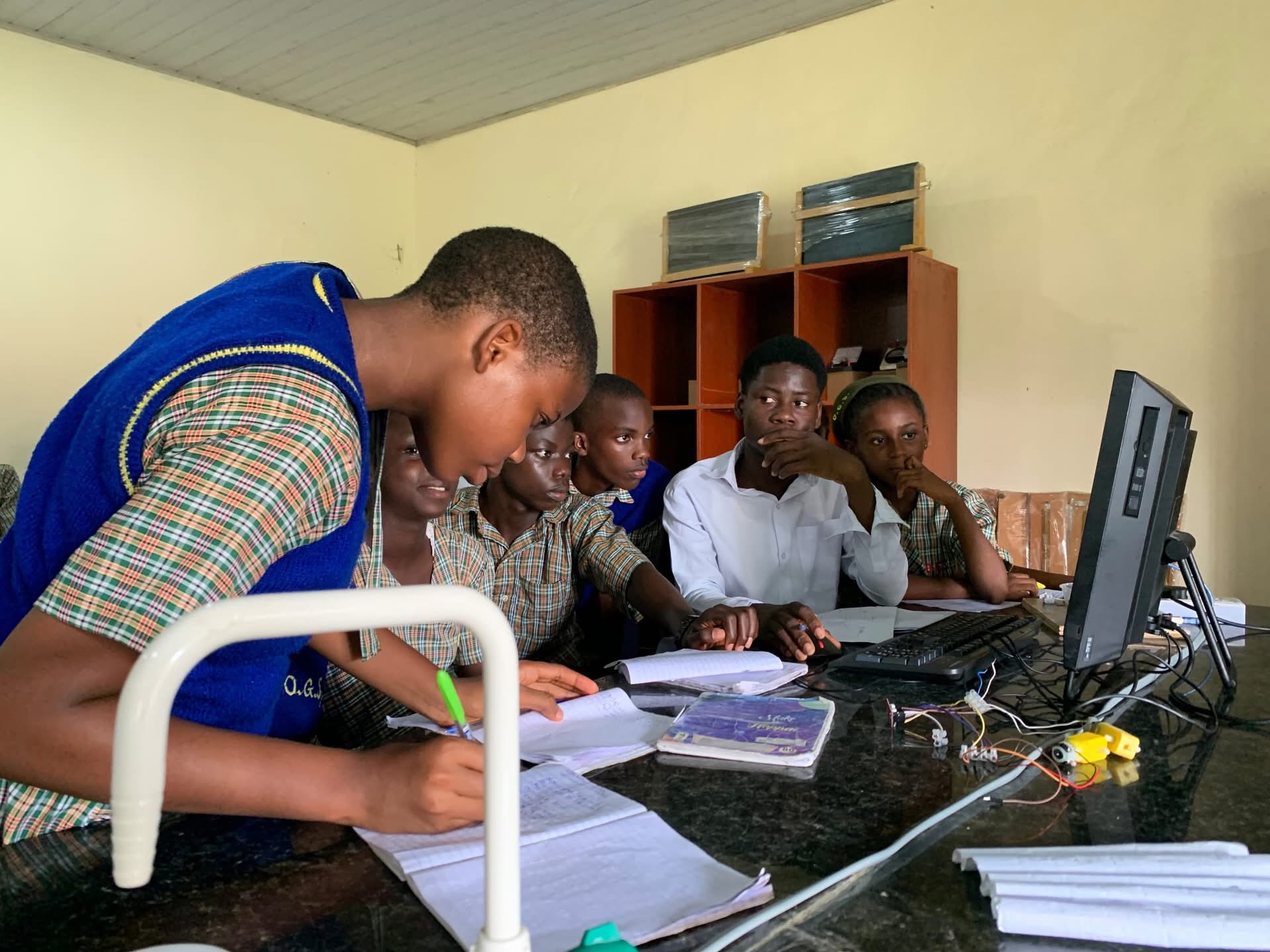
From Passive Listeners to Active Makers
Before the lab rollout, many students at Okrika Grammar School saw physics and mathematics as difficult, even intimidating. After a few weeks in the lab, teachers reported a noticeable change: students who rarely raised their hands in class were now volunteering to explain how a sensor works or why a motor needed a driver circuit. The robotics lab Rivers State initiative had given them a platform where they could experiment safely and see immediate results from their ideas.
Linking Curriculum to Real-World Challenges
In one early project, students were asked to design a basic system that could alert when water reached a certain level, an issue familiar to riverine communities. Using simple sensors, microcontrollers, and buzzers, they mapped textbook concepts like resistance, voltage, and conditional logic into a device that could actually solve a problem they recognized from everyday life. Suddenly, equations had purpose.
Building Confidence and Aspirations
Early feedback from the okrika grammar school STEM community has been powerful. Students now talk about becoming robotics engineers, product designers, and software developers. Parents report children coming home excited to explain how circuits work or to sketch ideas for new projects. Teachers, too, are more engaged, using the lab to reinforce lessons in physics, ICT, and mathematics with practical demonstrations.
💡 Pro Tip for Schools: Start tracking simple indicators; student participation, project completion, and interest in STEM careers to measure the impact of your own lab rollout.
How Technovation Clubs Build Problem-Solvers, Collaborators, and Spatial Thinkers
At the heart of the Okrika Grammar School experience is not just equipment, it is the club culture. Through the technovation club Nigeria model, students meet regularly to explore robotics, coding, and engineering challenges in teams. This structure intentionally nurtures three essential skills for tomorrow’s engineers: problem-solving, collaboration, and spatial logic.
Problem-Solving: Learning to Think Like Engineers
Each club session introduces a challenge; build a line-following robot, create a simple automatic light, or program a sensor to respond to movement. Students must break the problem into smaller steps, decide what they already know, and identify what they need to research. This structured approach mirrors real engineering design, where solutions are discovered through iteration, not memorization. Over time, students become comfortable with complexity and ambiguity, a critical mindset for any future engineer or innovator.
Collaboration: Learning to Build in Teams
Robotics projects are rarely solo efforts. In technovation clubs, one student might handle wiring, another writes code, while a third documents the process or presents the final project. This division of roles teaches leadership, communication, and respect for different strengths. Students learn to listen, negotiate, and give constructive feedback, skills that are just as important in a modern engineering firm as any technical knowledge.
Spatial Logic: Seeing in 3D, Thinking in Systems
When students assemble a robot chassis, route wires through tight spaces, or mount sensors at specific angles, they develop spatial reasoning; the ability to visualize objects and systems in three dimensions. This is a core competency for fields like mechanical engineering, architecture, and product design. Through hands on STEM education, abstract diagrams become physical layouts, and students begin to “see” how components fit together inside a device or structure.
Replicating the Model: High-Impact STEM Without Massive Capital
Many school leaders assume a robotics lab requires a huge budget and imported equipment. The Okrika Grammar School example shows a different path: start small, stay focused, and prioritize learning outcomes over flashy hardware. Any school can begin to replicate this model with thoughtful planning and the right partners.
Start with core kits, not full labs: A few affordable microcontroller kits, basic sensors, motors, and breadboards are enough to launch a functional robotics club. Expansion can follow as interest and capacity grow.
Repurpose existing spaces: A regular classroom, library corner, or unused lab can become a technovation hub. Simple storage boxes and shared laptops go a long way when activities are well-structured.
Invest in teacher capacity: The most valuable resource is a motivated teacher or mentor. Short training sessions, project guides, and ongoing support can empower educators to lead sessions confidently, even if they are new to robotics.
Leverage community and partners: Local professionals, alumni, and organizations can donate time, equipment, or mentorship. Strategic partnerships help schools build sustainable okrika grammar school STEM-style programs without bearing all the costs alone.
📌 Remember: The goal is not expensive robots, it is meaningful learning. Even simple projects can ignite powerful curiosity and confidence.
Partner with NDI to Launch a Technovation Club in Your School
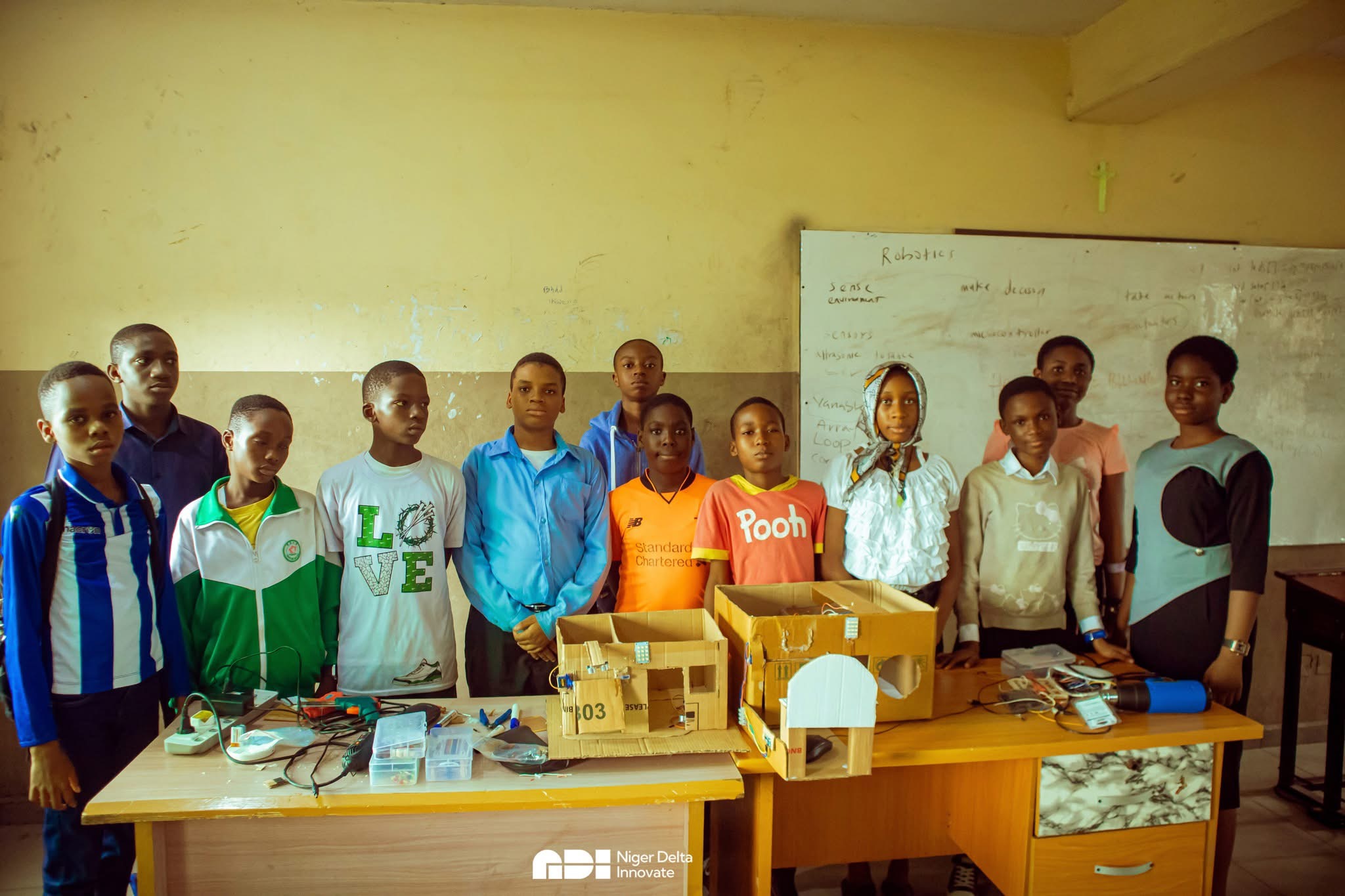
The transformation at Okrika Grammar School did not happen by accident. It was the result of intentional design, community support, and partnership. If you are a school leader, educator, parent, or policymaker who believes your students deserve the same opportunities, you do not have to start from zero or do it alone.
NDI works with schools across Nigeria to set up technovation club Nigeria chapters and practical robotics programs that fit local realities. From selecting cost-effective equipment to training teachers and designing project-based curricula, NDI helps schools build sustainable hands on STEM education ecosystems that truly prepare students for future careers in engineering, technology, and innovation.
Imagine your students gathered around a table, just like those at Okrika Grammar School debating circuit designs, writing code, and cheering as their first motor spins. That first spark of understanding can change the trajectory of a young person’s life, and, collectively, the future of our communities.
If you are ready to bring a robotics lab Rivers State–style experience to your school, now is the time to act. Partner with NDI to launch a Technovation Club, access practical training and starter kits, and join a growing network of schools proving that Nigerian students can compete and lead in the global STEM landscape.
Reach out to NDI today to explore how your school can adapt the Okrika Grammar School model, ignite curiosity, and start creating tomorrow’s engineers one spinning motor at a time.
