When Physics Comes Alive: Lessons from the Okrika Grammar School Robotics Lab
When Physics Comes Alive: Lessons from the Okrika Grammar School Robotics Lab
On a typical school day, physics lessons often begin with formulas written across a chalkboard. Students learn about motion, distance, force, velocity, energy, and electrical systems through diagrams and definitions. While these concepts form the foundation of scientific understanding, many students struggle to answer one important question: How does this apply in the real world?
At Okrika Grammar School (OGS), that question recently found a powerful answer.
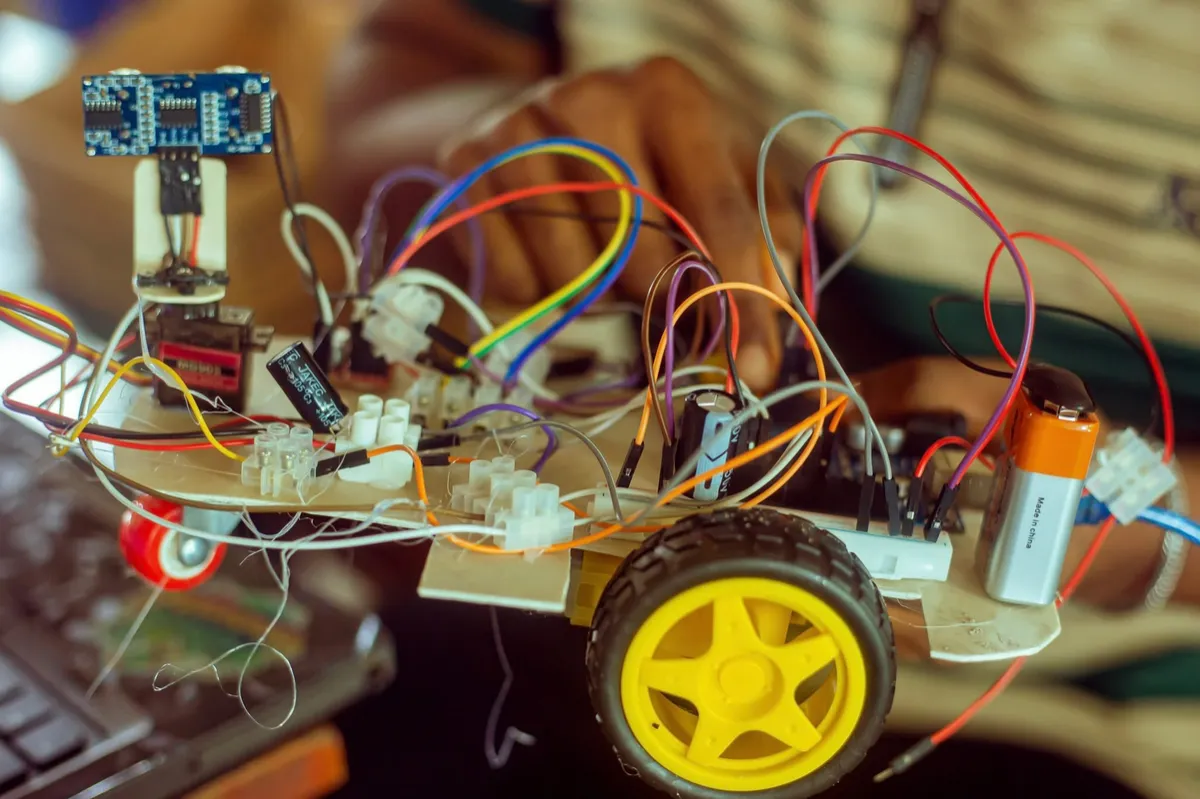
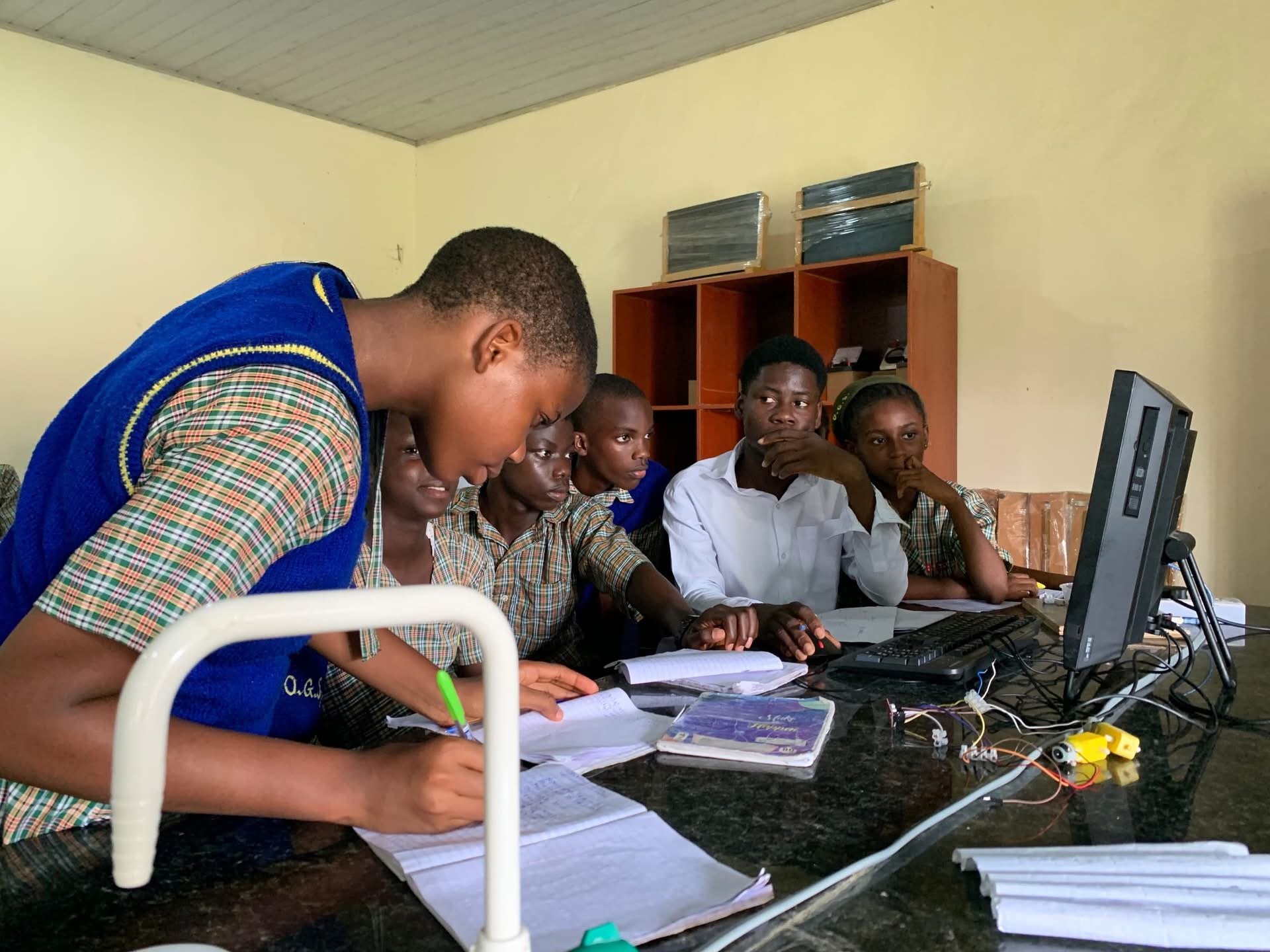
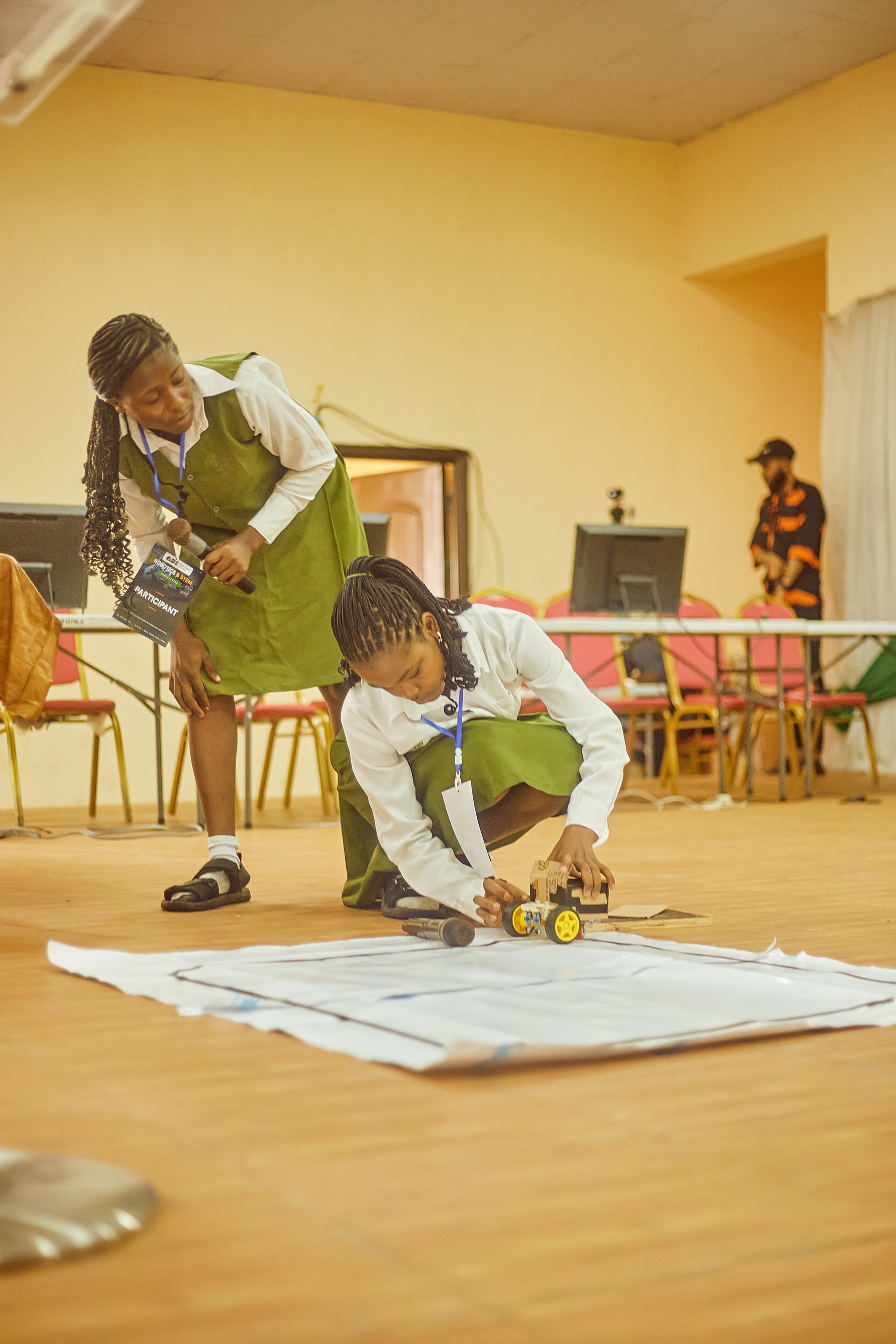
Inside the school's robotics lab, a group of excited students stood around a floor mat, watching months of learning and teamwork come to life. Their mission was simple but ambitious: test the first custom-built obstacle-avoiding rover they had designed with the support of NDI mentors.
As the rover moved forward, detected an obstacle, paused, and changed direction without human intervention, the room erupted with excitement. For the students, it was more than just a successful demonstration. It was a moment of discovery. Concepts that once existed only as equations in textbooks were suddenly visible, measurable, and moving before their eyes.
This is the transformative power of robotics education in Nigeria. It turns theoretical knowledge into practical experience, encourages innovation, and helps students develop the skills required to compete in a technology-driven world.
From Abstract Formulas to Real Engineering
One of the greatest challenges in education is helping students connect theory with practice. In many classrooms, learners are introduced to scientific principles long before they have the opportunity to see those principles in action.
Students can memorize Newton's Laws of Motion, calculate speed and distance, and learn about electrical current, yet still struggle to understand how those ideas influence the technology they use every day.
Robotics changes this dynamic completely.
When students build a robot, every lesson becomes connected to a real-world application. Suddenly, physics is no longer an abstract subject. It becomes the reason a rover moves, turns, accelerates, or stops. Mathematics is no longer just numbers on a page. It becomes the tool used to calculate distances, optimize movements, and improve efficiency.
The obstacle-avoiding rover developed by the OGS team serves as a perfect example. To make the rover respond to objects in its path, students had to understand how sensors collect information, how electrical signals travel through circuits, and how software converts data into action.
What started as classroom lessons became an engineering challenge.
Through hands-on experimentation, students learned that mistakes are not failures but part of the innovation process. Every misplaced wire, coding bug, or unexpected movement provided an opportunity to apply critical thinking and improve the design.
This shift from passive learning to active creation represents one of the most significant benefits of robotics education.
How Robotics Brings STEM Learning Together
Many educational subjects are traditionally taught separately. Physics is taught in one class, mathematics in another, and computer studies somewhere else. However, real-world challenges rarely fit neatly into a single discipline.
Robotics introduces students to an integrated learning experience where multiple fields work together toward a common goal.
Physics in Action
The OGS rover project required students to apply principles related to motion, energy transfer, circuitry, and mechanics. Every successful movement demonstrated the practical application of scientific laws.
Students could physically observe the relationship between force and motion rather than simply reading about it. They could test the impact of changes to wheel design, weight distribution, or power supply and see immediate results.
Mathematics with Purpose
Building a functioning rover requires precision. Students use mathematical concepts to measure distances, calculate angles, estimate power consumption, and evaluate performance.
Instead of solving equations solely for examination purposes, learners see mathematics as a practical tool that helps them create and improve technology.
Programming and Computational Thinking
Modern robotics depends on software.
Students at OGS learned to write instructions that guided the rover's behavior. They discovered how sensors communicate with control systems and how programs can be adjusted to improve efficiency and performance.
This exposure develops computational thinking, one of the most important skills for future careers in technology.
Teamwork and Problem-Solving
Perhaps most importantly, robotics teaches collaboration.
No successful robotics project is built by a single person. Students must share ideas, divide responsibilities, solve problems collectively, and communicate effectively.
By working together, OGS students learned the value of teamwork, leadership, patience, and resilience. These are essential skills that extend far beyond the laboratory environment.
It is this multidisciplinary approach that makes robotics one of the most effective models for STEM learning in the Niger Delta and across Nigeria.
The Growing Importance of Robotics for Students
The global workforce is changing rapidly. Technologies such as artificial intelligence, automation, robotics, data science, and machine learning are transforming industries at an unprecedented pace.
The careers that students will pursue in the future may look very different from those available today.
This reality makes the importance of robotics for students increasingly clear.
Robotics education prepares learners not only for specific technology careers but also for a future where problem-solving, creativity, and adaptability are essential.
Students who learn robotics gain valuable experience in:
Critical thinking
Design thinking
Engineering principles
Computer programming
Digital literacy
Innovation and entrepreneurship
Project management
Collaboration and communication
These skills are transferable across countless professions and industries.
Whether a student eventually becomes an engineer, medical professional, entrepreneur, software developer, researcher, or educator, exposure to robotics helps cultivate a mindset focused on innovation and continuous learning.
For Nigerian students, this preparation is particularly important as the nation expands its participation in the global digital economy.
The Journey of the OGS Robotics Lab
The story of the Okrika Grammar School Robotics Lab is a powerful example of what can happen when students are given access to meaningful, hands-on learning opportunities.
Rather than limiting science education to classroom theory, the robotics lab creates an environment where experimentation is encouraged and creativity flourishes.
The journey began with a vision to provide students with practical STEM experiences that would bridge the gap between academic knowledge and real-world application.
With guidance from experienced NDI mentors, students were introduced to robotics design, electronics, coding, and engineering processes. They learned how to transform ideas into prototypes and prototypes into functional solutions.
The obstacle-avoiding rover became one of the team's most significant milestone projects.
From the earliest brainstorming sessions to the final testing phase, students were involved in every aspect of development. They assembled components, wrote software, tested performance, identified weaknesses, and implemented improvements.
The project taught lessons that cannot easily be replicated through traditional classroom instruction.
Students learned persistence when systems failed.
They learned analytical thinking when diagnosing technical problems.
They learned creativity when adapting solutions to overcome limitations.
Most importantly, they gained confidence.
For many young people, confidence is the difference between curiosity and innovation. When students realize they can build technology with their own hands, they begin to see themselves differently. They stop viewing technology merely as consumers and start imagining themselves as creators.
That mindset shift may ultimately become the most valuable outcome of the OGS Robotics Lab.
Building Future Innovators in the Niger Delta
The Niger Delta has long been recognized for its talent, resilience, and potential. However, unlocking that potential requires investment in educational opportunities that align with the demands of the future.
Robotics programs play an important role in that mission.
By exposing students to emerging technologies at an early age, schools can help create a generation of innovators capable of solving local and global challenges.
Students who develop robotics and STEM skills may one day create solutions for challenges in healthcare, agriculture, environmental sustainability, transportation, manufacturing, and education.
The impact extends beyond individual achievement.
Robotics programs strengthen communities by creating pathways to higher education, technical careers, entrepreneurship, and economic development.
As more schools adopt practical STEM initiatives, the region can build a stronger foundation for technological advancement and innovation-driven growth.
Preparing Students for International Competitions
One of the most exciting outcomes of robotics education is the opportunity to participate in international innovation programs and competitions.
Events such as Technovation provide students with platforms to showcase their ideas, collaborate with peers from around the world, and develop solutions to real-world problems.
Participation in these competitions teaches students how to think beyond the classroom.
They learn to identify challenges, design solutions, communicate ideas effectively, and present projects to global audiences.
For students in the Niger Delta, these experiences demonstrate that excellence has no geographical boundaries.
A student designing a robotics project in Okrika has the same potential to innovate as a student in New York, London, Singapore, or Tokyo.
Programs like the OGS Robotics Lab help close the opportunity gap by ensuring that talented young people have access to the resources and mentorship necessary to compete on the world stage.
They are not simply learning technology.
They are preparing to represent Nigeria.
Why Robotics Education Matters Today
The successful testing of Okrika Grammar School's first obstacle-avoiding rover represents something much larger than a completed student project.
It symbolizes a new approach to education, one where learning is interactive, practical, and future-focused.
The rover's movement across that floor mat demonstrated the power of experiential learning. Students could see physics in motion, mathematics at work, programming in action, and teamwork producing measurable results.
In a world increasingly shaped by technology, robotics education is no longer a luxury. It is becoming a necessity.
By investing in robotics programs, schools can equip students with the knowledge, confidence, and skills needed to succeed in the digital age.
The students of Okrika Grammar School have already taken an important step on that journey. Their rover may be small, but what it represents is enormous: the emergence of a generation of young innovators ready to build, create, and lead.
As robotics continues to gain momentum across Nigeria, stories like OGS remind us that the future of innovation begins when students are given the opportunity to turn ideas into reality.
