
Beyond Doctor or Lawyer: Mapping 21st-Century Tech Careers for Nigerian Youth
Beyond Doctor or Lawyer: Mapping 21st-Century Tech Careers for Nigerian Youth
For generations, many Nigerian students have grown up hearing the same career advice: become a doctor, lawyer, engineer, or accountant. While these professions remain valuable, today's economy offers a much broader landscape of opportunities. Across Nigeria, particularly in the Niger Delta, technology is creating new pathways for ambitious young people to build meaningful, well-paying careers.
The story of Blessing shows exactly why early exposure to technology can change a student's future.
How Blessing Discovered Her Place in Tech

As a secondary school student in the Niger Delta, Blessing was naturally curious about how technology worked. While many of her classmates focused solely on academic subjects, she spent part of her free time learning basic computer hardware repair and experimenting with simple web design projects.
What started as curiosity soon became a valuable skill set. By understanding how computers functioned and learning the foundations of website creation, Blessing developed practical technical abilities long before entering higher education.
Those early experiences gave her confidence, problem-solving skills, and a clear sense of direction. While others were still trying to decide on a career path after graduation, Blessing had already discovered her passion. Today, those foundational skills have opened doors to a thriving technology career pathway, proving that exposure to technical skills during secondary school can create life-changing opportunities.
Her experience reflects a growing reality: technology careers are no longer reserved for a select few. They are becoming accessible options for students who start learning early and remain committed to developing their skills.
Expanding Career Aspirations Beyond Traditional Professional Tracks
The world of work is changing rapidly. Digital technologies are transforming industries ranging from finance and healthcare to agriculture, manufacturing, and energy. As businesses increasingly rely on technology, the demand for skilled professionals continues to rise.
For Nigerian youth, this shift means that career aspirations can extend far beyond traditional professions. Students can now pursue exciting opportunities that combine creativity, innovation, and technical expertise.
Parents and educators are increasingly recognizing that preparing students for tech careers involves more than teaching computer literacy. It means helping young people explore emerging fields, develop practical skills, and understand how technology can solve real-world problems.
The earlier students gain this exposure, the more options they have when planning their future.
High-Demand Tech Careers Shaping Nigeria's Future
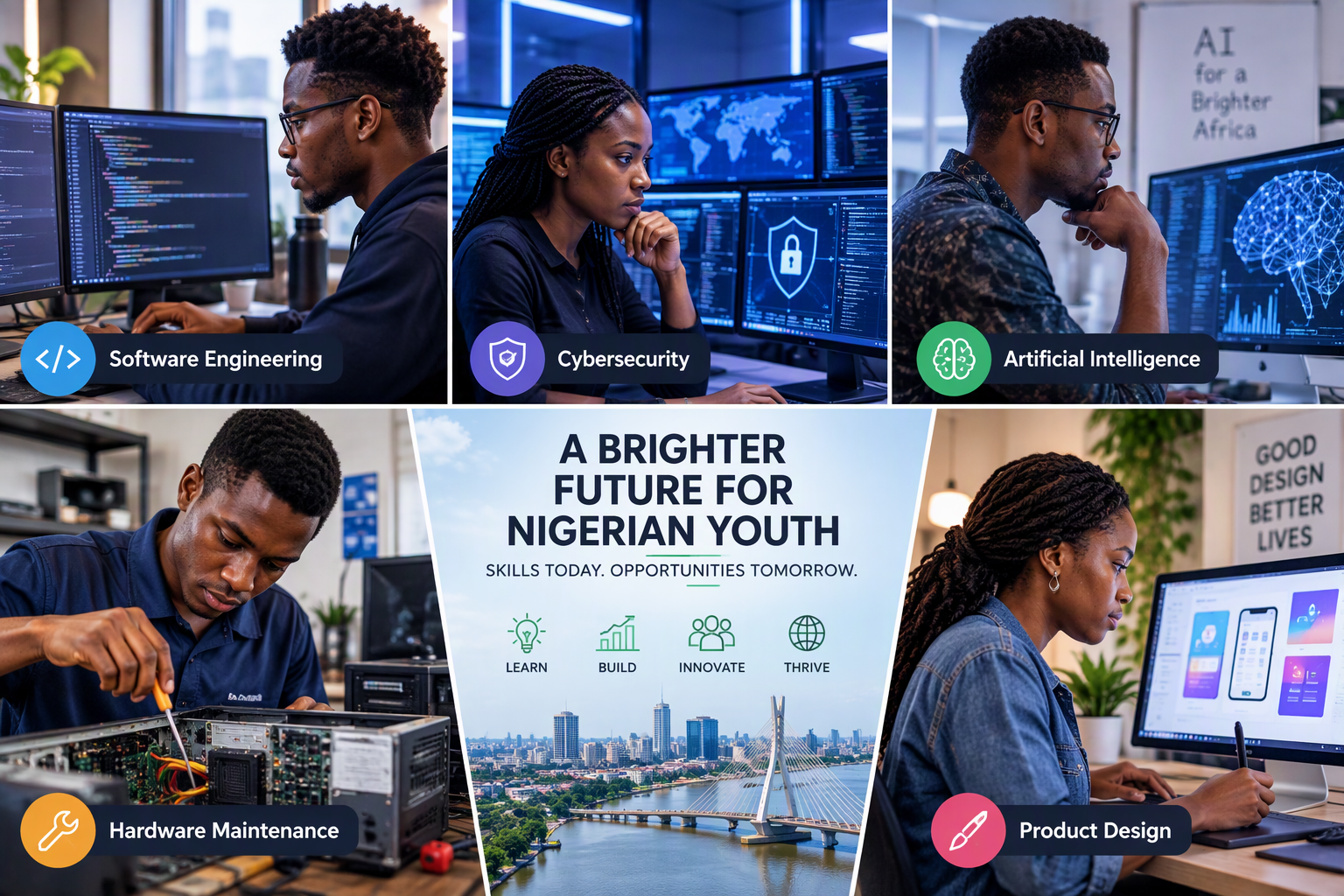
1. Software Engineering
Software engineering remains one of the most sought-after technology careers globally. Software engineers design, develop, and maintain applications, websites, and digital systems used by businesses and individuals every day.
Students interested in software engineering pathways in Nigeria can begin by learning programming fundamentals, website development, mobile app development, and problem-solving techniques. With dedication, these skills can lead to careers in startups, multinational companies, financial institutions, and remote international roles.
2. Cybersecurity
As organizations become more digital, protecting systems and data has never been more important. Cybersecurity professionals help prevent cyberattacks, secure sensitive information, and maintain digital trust.
This field offers exciting opportunities for students who enjoy investigation, critical thinking, and technology. Early exposure to networking, systems administration, and security concepts can create a strong foundation for future specialization.
3. Artificial Intelligence (AI)
Artificial intelligence is transforming the way businesses operate and make decisions. AI professionals develop systems that can analyze data, recognize patterns, and automate complex tasks.
Students who enjoy mathematics, technology, and innovation may find AI particularly appealing. Building foundational digital skills early can make advanced AI learning more accessible in the future.
4. Hardware Maintenance and Technical Support
Not every tech career involves writing code. Hardware technicians and IT support specialists play essential roles in keeping technology systems operational.
Blessing's first exposure to hardware repair demonstrates how valuable these skills can be. Organizations across various industries need professionals who can diagnose problems, maintain equipment, and support users effectively.
For students seeking tech jobs in the Niger Delta, hardware maintenance remains an excellent entry point into the broader technology ecosystem.
5. Product Design
Successful technology products require more than technical functionality. Product designers focus on creating intuitive, engaging experiences that solve user challenges.
This career combines creativity with technology and is ideal for students who enjoy visual communication, design thinking, and understanding human behavior.
As Nigeria's digital economy continues to grow, demand for skilled product designers is expected to remain strong.
Why Early Exposure Creates a Multi-Year Advantage
One of the biggest advantages students can gain is starting early.
A secondary school student who begins learning technology skills today could accumulate years of practical experience before completing a university degree. That experience often translates into stronger portfolios, greater confidence, and clearer career goals.
Early exposure helps students:
Develop problem-solving abilities.
Build practical technical skills.
Discover their interests before choosing a career path.
Gain hands-on experience through projects.
Adapt more quickly to emerging technologies.
Build employability skills alongside academic learning.
Students who engage with technology early often find themselves better prepared to take advantage of internships, scholarships, certifications, and industry opportunities later in life.
Balancing University Education with Technical Certifications
University education remains an important pathway for many technology careers. Degrees provide theoretical knowledge, research skills, and academic credentials that can support long-term professional growth.
However, today's employers increasingly value practical competencies alongside academic qualifications.
For this reason, students should consider combining formal education with industry-relevant certifications, project-based learning, and hands-on technical training.
This balanced approach allows young people to:
Strengthen their resumes.
Demonstrate practical capabilities.
Build professional portfolios.
Stay aligned with industry trends.
Improve employment opportunities after graduation.
The most successful technology professionals often combine classroom learning with continuous skills development throughout their careers.
The Future Belongs to Prepared Students
The next generation of innovators, software engineers, cybersecurity specialists, product designers, and technology entrepreneurs is already sitting in Nigerian classrooms today.
Blessing's journey proves that a simple introduction to hardware repair and web design can become the foundation for an exciting and rewarding career. For young people across the Niger Delta and beyond, the technology sector offers opportunities that extend far beyond traditional career expectations.
By introducing students to practical technical skills early, educators and training institutions can help unlock potential, create economic opportunities, and prepare young people for the demands of a rapidly evolving digital world.
Explore Your Technology Future Today
Ready to take the first step toward a technology career? Explore NDI's Applied Vocational and Technical Training Programmes and discover how hands-on learning can help prepare students for success in the digital economy.
